
Home is where the art is
Aboriginal paintings
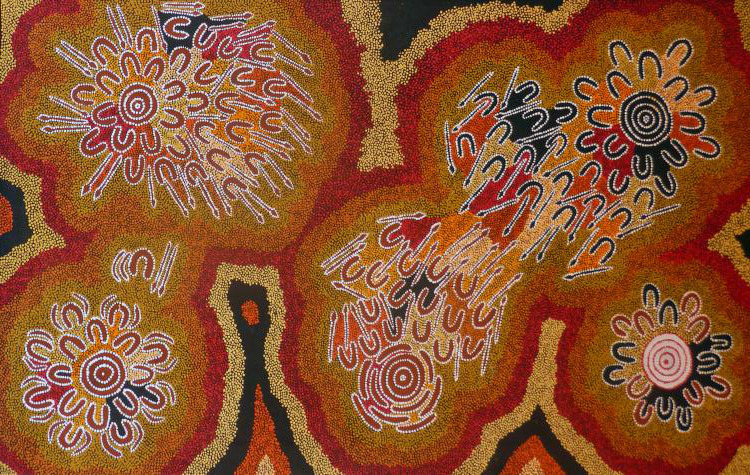
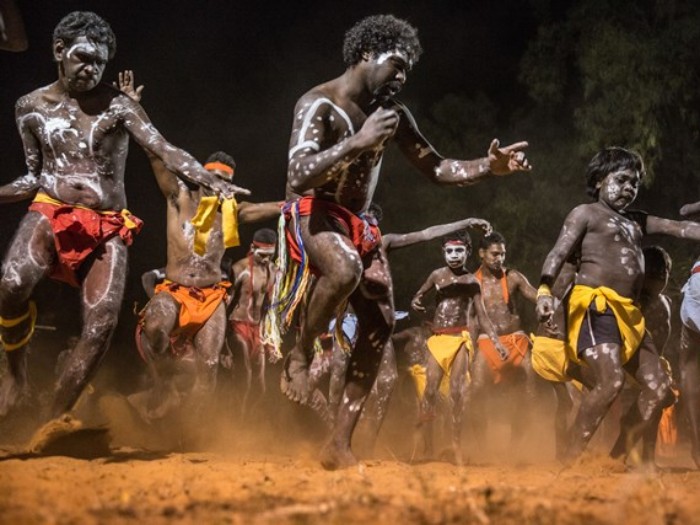
Aboriginal paintings on canvas and board only began 50 years ago: Traditionally, the Aboriginal paintings we now see on canvas, were scratched or drawn on rock walls, used in body paint or on ceremonial articles and importantly, drawn in sand or dirt accompanied by the song or story. In 1971, Geoffrey Bardon a school teacher
working with Aboriginal children in Papunya, noticed the Aboriginal men, while telling stories to others, were drawing symbols in the sand. He encouraged them to put these stories down on board and canvas, and there began the Aboriginal art
movement. Aboriginal paintings differs in character and style depending from which region the Aboriginal artist is from. You can recognise the contemporary art from the community where it was created.
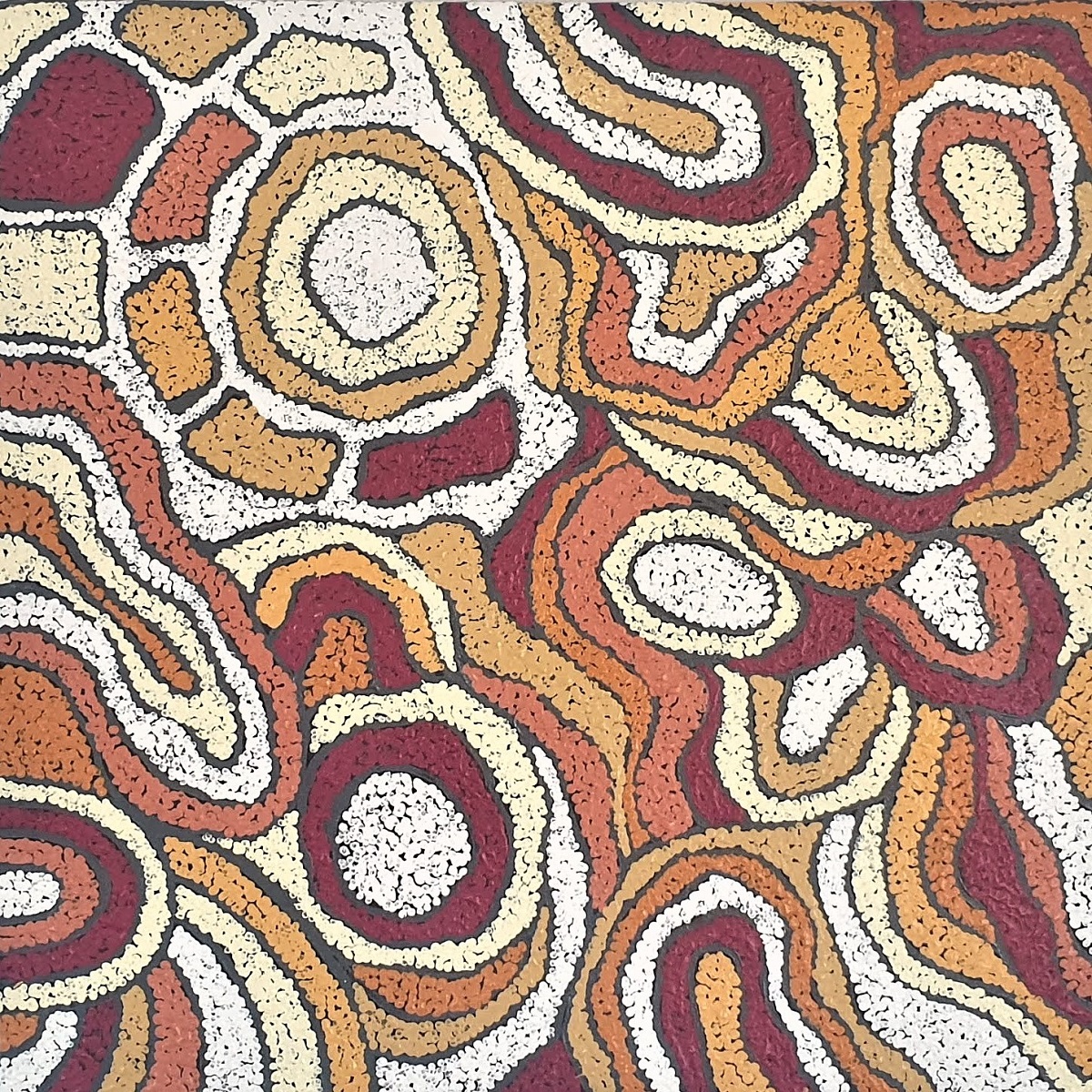
The interpretation of Aboriginal paintings
Motifs, symbols or graphic elements as they are variously described feature in most
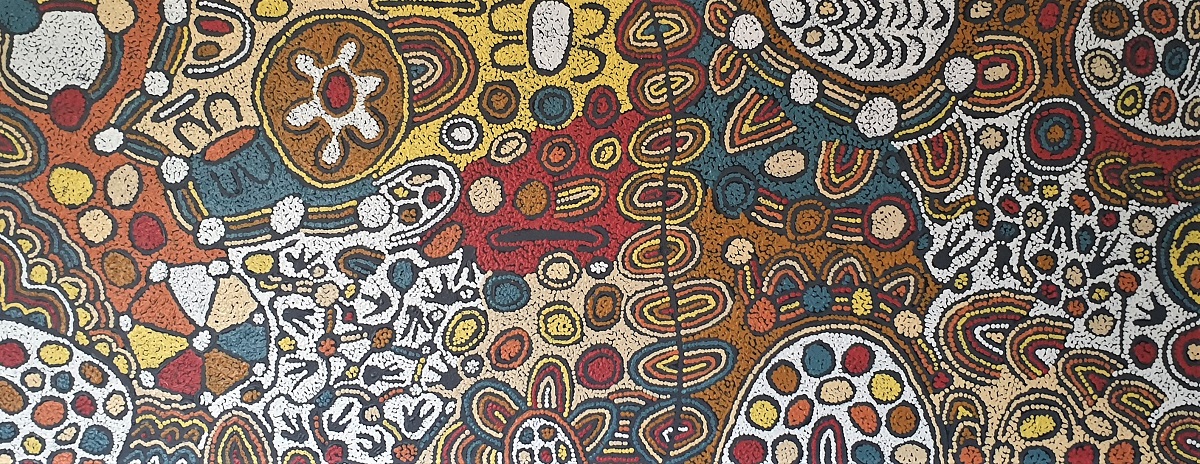
Aboriginal paintings. There are many different meanings of each motif and their use in combination can also result in different interpretations. For example, a series of concentric circles can mean a waterhole, a camp fire, a mountain or a tree. One way to describe this is to say that the ‘text’ in the picture is written in code. To disguise the meanings for sacred and secret reasons.
When seen from an aeroplane flying at a great height, Australian deserts often
appear to be a series of patterns and colours which closely resemble an Aboriginal
artwork.
The Aboriginal artist always works on a canvas which lies flat on the ground, never
upright or on a easel. It makes that the artwork is connected with the earth and the
artist. Aboriginal paintings do not feature horizons or perspective in the Westerns
sense of the word. It’s a hunter’s eye view of the world.
Different styles of Aboriginal paintings
The most common style of Aboriginal paintings is the dot painting. It’s been
recognized by many as Aboriginal Art. But Aboriginal art is so much more. Each
region has it’s own unique style and colours. The patterns, as mentioned earlier,
come from many places and can have different meanings. Aboriginals believe that
their ancestors and spirits live on the objects like, trees, waterholes, animals and
rocks. They are a great inspiration when they create their artworks.
Aboriginal art symbols
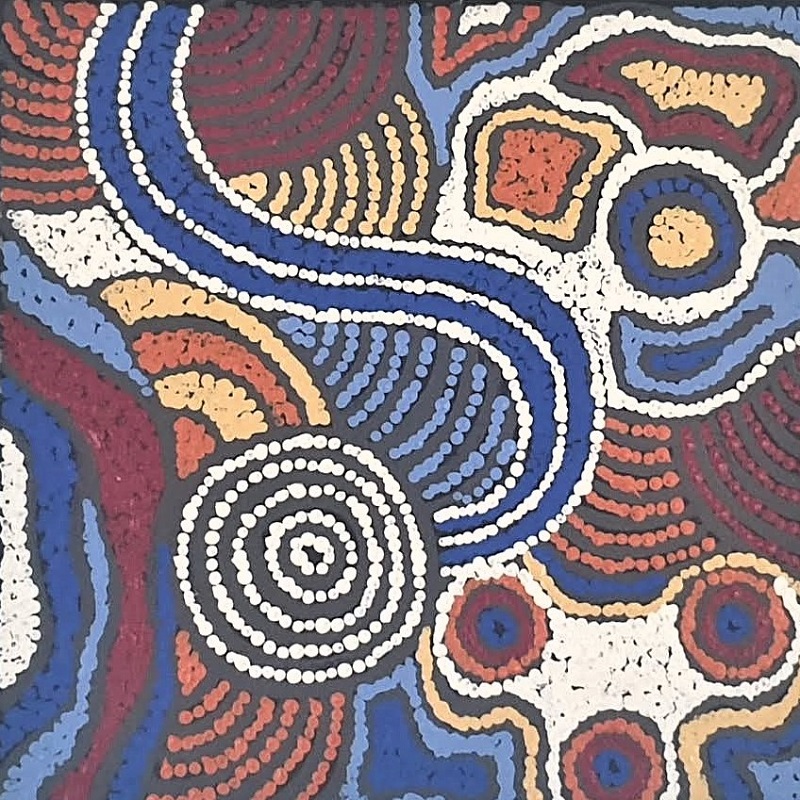
There are many different symbols (see symbol map at Australian Aboriginal Art).
Some Aboriginal painting symbol may look the same, the meaning can be quite
different. The most important symbols are: The Animal tracks, people sitting, waterholes and meeting places.
The future of Aboriginal art
In the last 40+ years contemporary Aboriginal paintings has made a profound impact on the Western art world. The upcoming marvellous artists keep the important stories and their culture alive through paintings. The living art of Aboriginal Australia has a bright future ahead and has been tagged the most exciting contemporary art form of the 21 st century.